
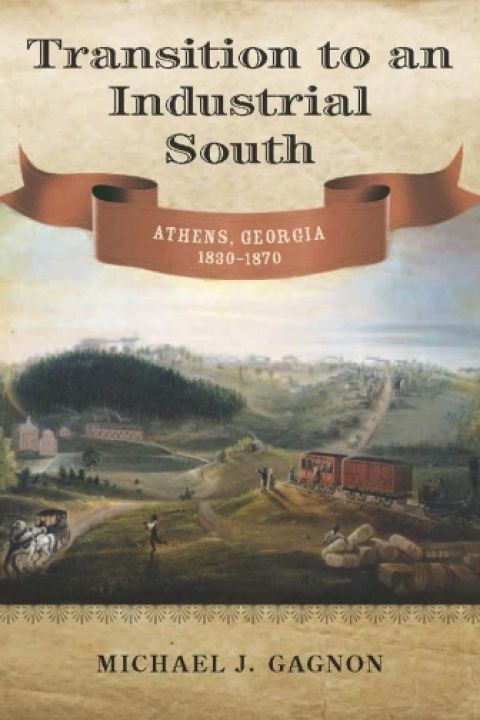
Transition to an Industrial South: Athens, Georgia, 1830–1870
Buy with confidence
✓ Digital eBook
✓ Dedicated customer support
✓ Refund if we cannot fulfill your order
Renowned New South booster Henry Grady proposed industrialization as a basis of economic recovery for the former Confederacy. Born in 1850 in Athens, Georgia, to a family involved in the city’s thriving manufacturing industries, Grady saw firsthand the potential of industrialization for the region. In Transition to an Industrial South, Michael J. Gagnon explores the creation of an industrial network in the antebellum South by focusing on the creation and expansion of cotton textile manufacture in Athens. By 1835, local entrepreneurs had built three cotton factories in Athens, started a bank, and created the Georgia Railroad. Although known best as a college town, Athens became an industrial center for Georgia in the antebellum period and maintained its stature as a factory hub even after competing cities supplanted it in the late nineteenth century. Georgia, too, remained the foremost industrial state in the South until the 1890s. Gagnon reveals the political nature of procuring manufacturing technology and building cotton mills in the South, and demonstrates the generational maturing of industrial laboring, managerial, and business classes well before the advent of the New South era. He also shows how a southern industrial society grew out of a culture of social and educational reform, economic improvements, and business interests in banking and railroading. Using Athens as a case study, Gagnon suggests that the connected networks of family, business, and financial relations provided a framework for southern industry to profit during the Civil War and served as a principal guide to prosperity in the immediate postbellum years.About this book
Book details
Related products